The Cost of Burnout, Part 4: Mental Health
I’d spend 2 hours scrolling social media waiting for the perfect solution to my burnout to appear, hoping I’d actually find that get-rich-quick scheme so I could quit my job.
I would click on the ads for new clothes and then search for the outfit that would make me feel better and take the burnout away.
In a spurt of hopefulness, I’d click on the social media page for my local yoga studio when it went by in my feed and buy a pass for another month of classes. And then I’d never have the energy to go.
I’d go over to the LinkedIn jobs section looking for my next role. One that would challenge me a bit so I could beat the boredom but not have me drowning in overwork or facing a toxic environment.
I’d check my personal email again, but there was no new job offer in my inbox, even though I had been applying sporadically, hoping for one that would cure my burnout.
I’d turn the TV on and binge watch my current favorite show.
That was my pattern, night after night, week after week. The heavier my workday, the more I tuned out everything around me. The mental exhaustion from managing competing demands and personalities at work meant I crawled into a social media doomscrolling hole and didn’t come out until I fell asleep on the couch.
The whole time, I’d be quietly mad at myself for wasting time, spending money on things I didn’t need or use, getting more and more bitter that others seemed to have all the things I wanted with no effort.
When my world got smaller
Eventually that frustration and bitterness started impacting my social life, too. I was doing less and less with other people, because I just wanted to sit on the sofa and scroll. Unless someone was meeting me, I started backing out of plans. Then I started bailing even if someone was meeting me. At one point, I realized that it had been 3 weeks since I had left the house for anything but errands.
When I used social media, shopping, or binge-watching shows to try to escape my burnout, I was killing my mental health (and sometimes my wallet!). Research on working adults backs this up. One study found that work overload was linked to addictive social media use, and that social media use was linked to depression symptoms.[1] The data supports what our brains already know: sitting on the couch scrolling or binge watching every night is not good for us.
The problem was I kept trying to find something outside of me that would cure my boredom and fix my burnout. But everything I was doing was shrinking my world, feeding my burnout instead of relieving it.
Ten minutes and a text
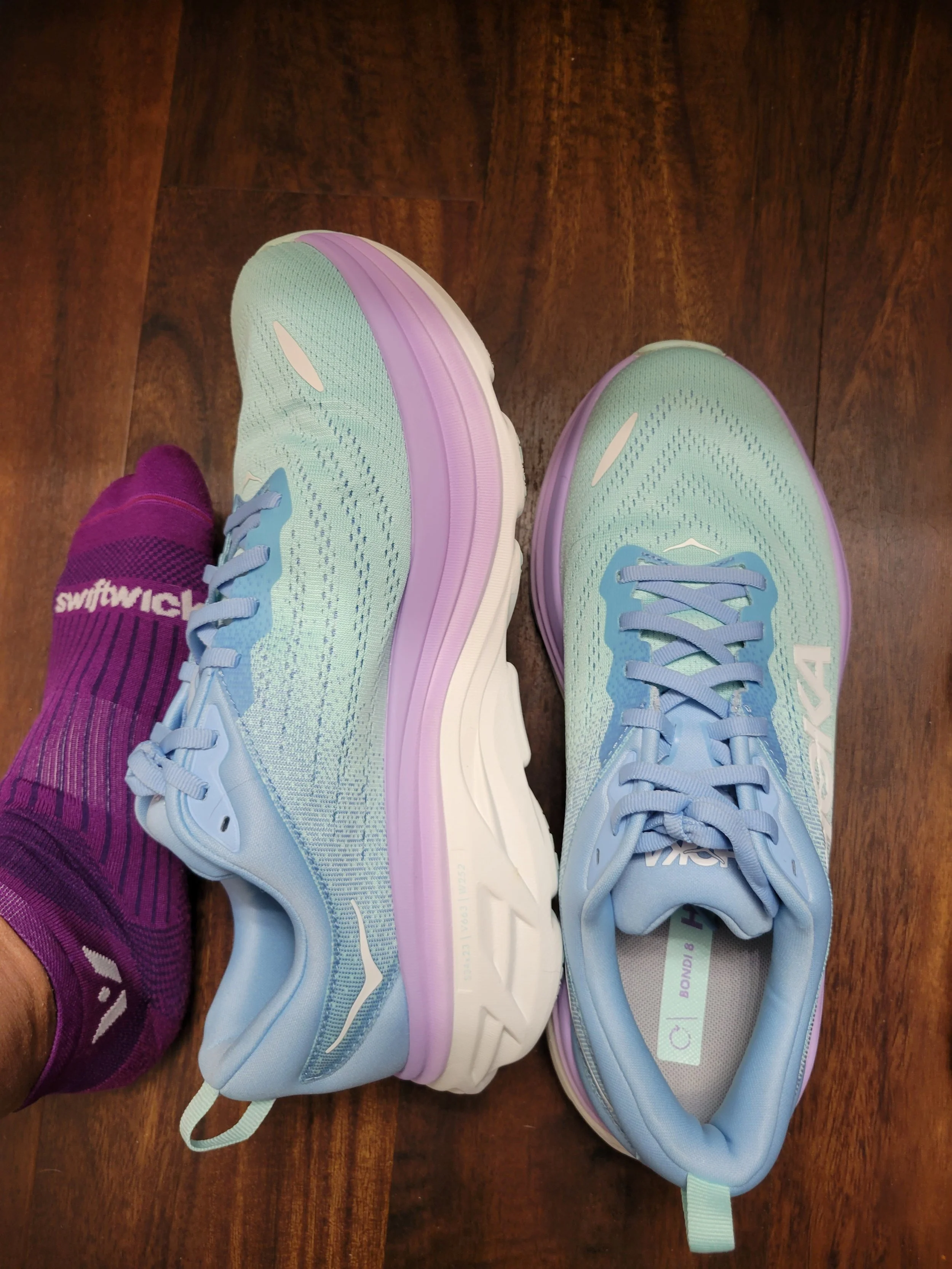
What finally got me off the couch was something really simple: to support a friend who wanted to get more active, I agreed to do a 10-minute walk each day. We lived in different cities so we couldn’t walk together, but we agreed to walk and then text each other for accountability.
The first week was hard. I could spend 2 hours a day scrolling, but somehow finding 10 minutes a day to walk felt impossible. I was grumbling to myself “I just want to go sit on the couch” as I went outside after dinner to walk in my neighborhood. I grumbled in my head as I turned left out of my driveway, wondering why I had agreed to this when I was always so exhausted.
But as I walked, I started to notice the rays of light through the clouds. I began to enjoy the colors of the sunset. By the time I returned home, my mood felt just a little bit lighter, and I sent a text to my friend: “10 minutes done.”
The first week continued to be hard. The second week was a bit easier. The third week had rain, but I was able to walk before it started in the morning one day and in the evening the next to keep that streak alive. By the fourth week, I noticed that my mind was more focused after my walks and my mood was lighter. I would come in after walking and actually get something done around the house before I sat on the couch. I was still overwhelmed and burned out, but my mental health was on the upswing.
Eventually I carved out time for several 10-minute walks a day, once I set up the Task Time blocks on my calendar that I shared last week. Getting sunshine and a break from my desk made that task time even more effective, because I could focus better.
Sophia’s story
My client Sophia has a similar story. She was an engineer who loved to play online games. She used to come home after work and play with friends. They were in different locations, but would connect online and play for a few hours. As her burnout increased, she’d back out of playing a few nights a week. Instead, she would play solo games on her phone. Over time, she almost never hung out with her friends and instead sat playing repetitive, mindless games on her phone each night.
When she came to me, she was spending almost 20 hours a week on her phone playing games (she had the data; she was an engineer after all!). She enjoyed her work projects, but was overloaded with too many critical deadlines in a toxic work environment. It was burning her out, and the toll was being paid in her friendships.
In our conversations, she shared that a few years ago, she had been hiking 10 or more miles a week on the trails around her home in California. Now, she didn’t even want to leave her house.
She decided she wanted to get outside more. She started small, just walking to her local coffee shop on Sundays instead of sitting around on her phone. Then she added walking to the train station on nice days instead of driving.
She found that the walk home after work helped her reset her brain, separating work from home life. When she got home and picked up her phone, she was more likely to look at messages from her friends instead of ignoring the notifications. She started gaming with her friends again every week instead of hiding in solo games. Her burnout wasn’t cured by changing her commute, but it improved her life outside of work.
There is no magic cure
Back in Part 1, I said burnout had taken energy from my friends and from myself, and that was a story for another day. This is that story.
Over this series, I’ve shared what burnout cost me at home, in my body, and in my mind. And for years, I kept searching for the magic cure. The right outfit. The right job. The chocolate bar.
The magic cure never showed up, because there isn’t one.
What actually worked was small. Answering a director by the end of the day instead of in the moment. Thirty minutes with no meetings to start my morning. A 10-minute walk and a text to a friend. None of those fixed everything. Each one gave me back a little more of my life.
Part of the reason I kept reaching for the wrong cure is that I didn’t know what I was dealing with. I wanted a job that would challenge me without burying me. I was burned out and bored out at the same time, and each one needs a different fix.
If you’re not sure which one you’re facing, take my free quiz: Burned Out, Bored Out, or Both? https://www.movetojoycoaching.com/burnedorbored It’s the first step toward finding the change that will actually work for you.
Read the rest of the series:
Part 1: Burnout Doesn’t Stay at Work https://www.movetojoycoaching.com/blog/burnout-doesnt-stay-at-work
Part 2: The Number I Swore I’d Never See Again https://www.movetojoycoaching.com/blog/the-number-i-swore-id-never-see-again
Part 3: When “This Job Is Killing Me” Stops Being a Joke https://www.movetojoycoaching.com/blog/when-this-job-is-killing-me-stops-being-a-joke
Sources
Work overload, addictive social media use, and mental health in employees (Springer, 2022): https://link.springer.com/article/10.1007/s41347-022-00258-2